
Tech Talk
Forum home - Go back to Tech talk
|
Philips 90RL125 Transistor Radio
|
|
|
Return to top of page · Post #: 1 · Written at 4:55:28 PM on 16 March 2026.
|
|

|
Location: Sydney, NSW
Member since 1 October 2025 Member #: 2742 Postcount: 73 |
|
Thought I might try my hand at repairing a small transistor radio. So I bought a Philips 90RL125 on that auction site just now. So far I have been unable to locate a schematic for it. If anyone has one or knows where I can find one I would love to hear from you. 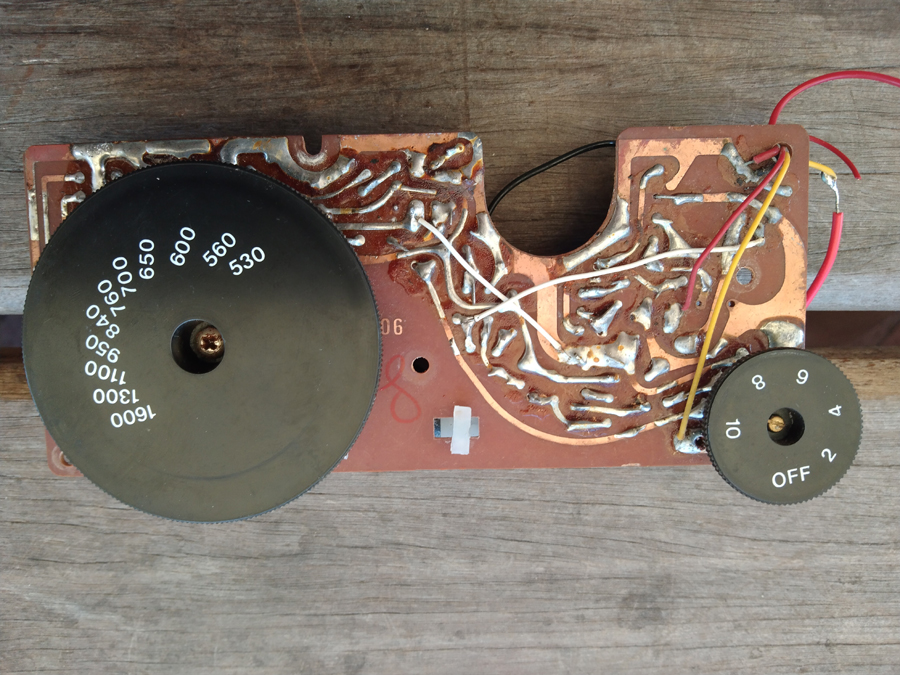 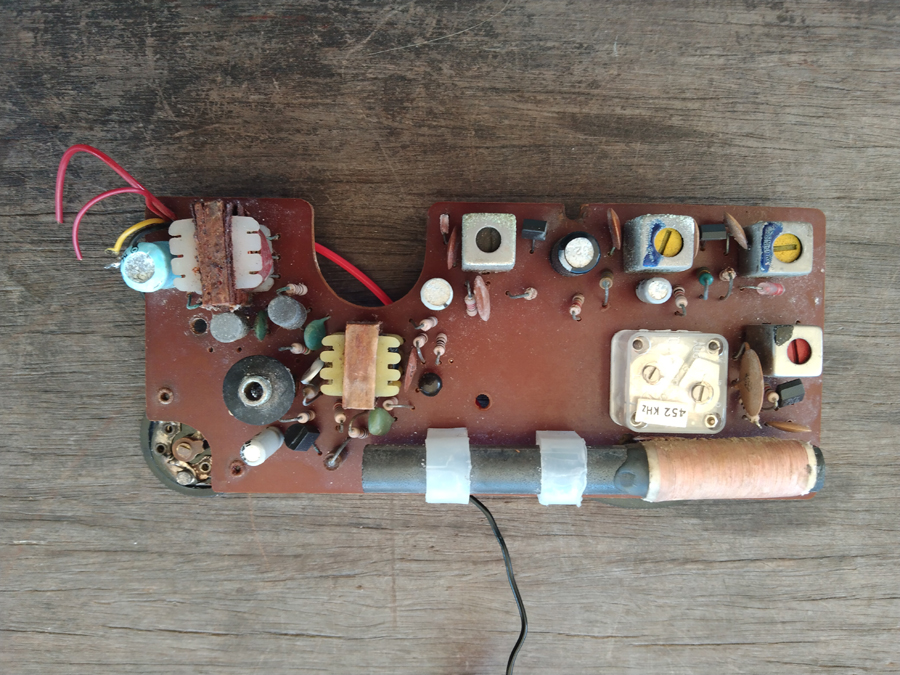 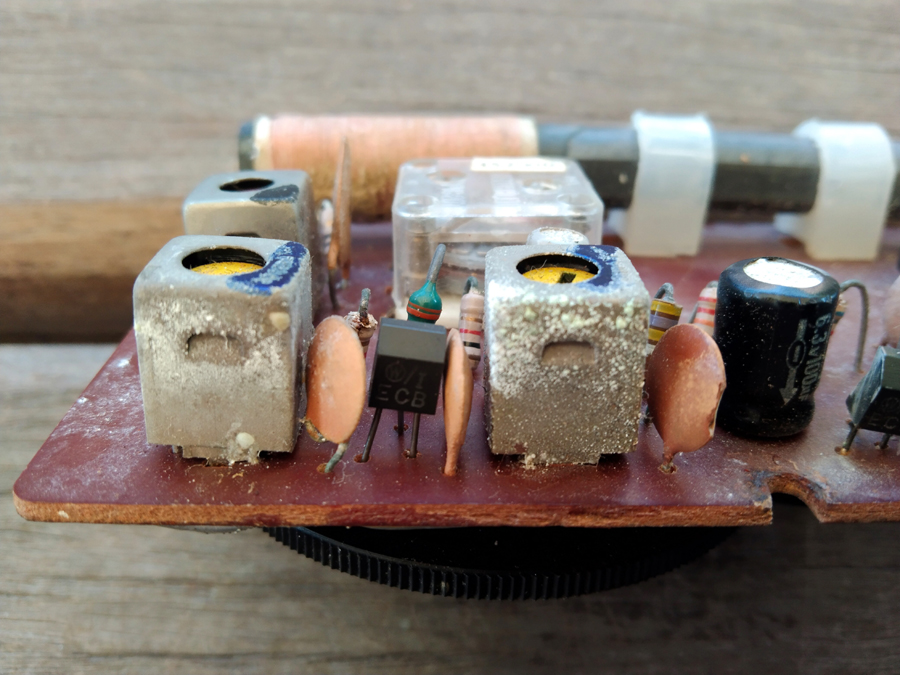 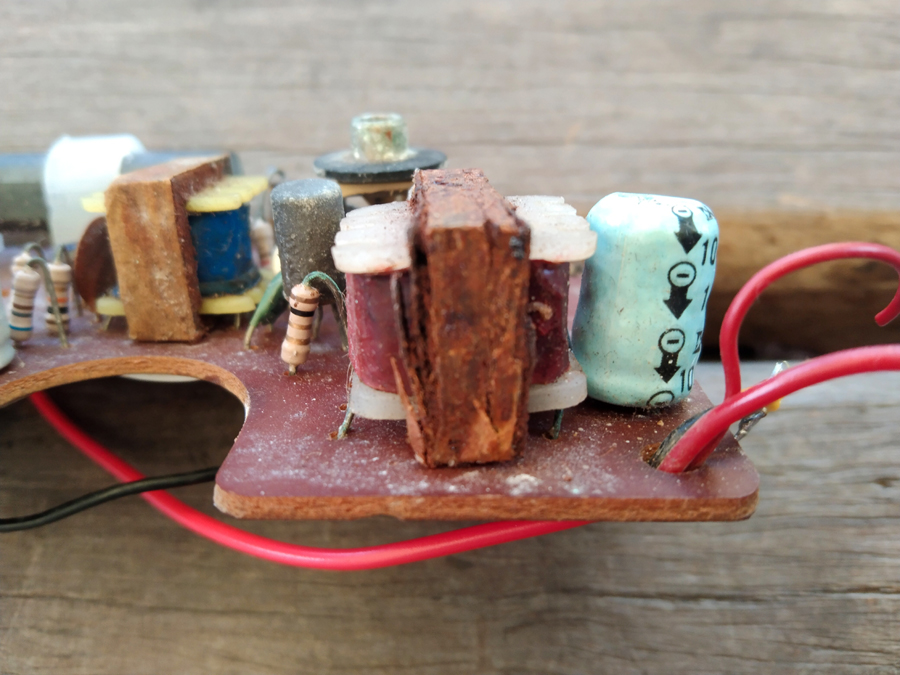 Philips 90RL125 Circuit Diagram |
|
|
Return to top of page · Post #: 2 · Written at 8:11:27 PM on 17 March 2026.
|
|

|
Location: Wangaratta, VIC
Member since 21 February 2009 Member #: 438 Postcount: 5746 |
|
A lot of those things had circuits within, otherwise they can be a rare beast. Some of the newer ones were IC and that poses an issue if it proves faulty. |
|
|
Return to top of page · Post #: 3 · Written at 8:12:13 AM on 18 March 2026.
|
|

|
Location: NSW
Member since 10 June 2010 Member #: 681 Postcount: 1409 |
|
Circuit board soldered joints for external power supply and earphones are prone to cracking. Was a regular fix on a Sangean ATS 800. |
|
|
Return to top of page · Post #: 4 · Written at 12:03:06 PM on 18 March 2026.
|
|
|
|
Location: Sydney, NSW
Member since 1 October 2025 Member #: 2742 Postcount: 73 |
|
Thanks Marcc and STC. Hopefully when it arrives it will have a schematic inside back cover. It is early 70's so I am hoping it's not too modern. Funnily though I had a possible cantidate kicking around my shed that I had recovered from a kerbside trash pile a few years ago. When I started thinking about transistors I started on it. As soon as I pulled the back off I noticed about three rather large IC's. It was working on FM but not AM. Those integrated circuits totally threw me so I buttoned it back up and put it aside. Now patiently waiting for the new victim to arrive. |
|
|
Return to top of page · Post #: 5 · Written at 12:09:50 PM on 18 March 2026.
|
|
|
|
Location: NSW
Member since 10 June 2010 Member #: 681 Postcount: 1409 |
|
I should have said external power supply and earphones jacks. |
|
|
Return to top of page · Post #: 6 · Written at 5:08:44 PM on 23 March 2026.
|
|
|
|
Location: Sydney, NSW
Member since 1 October 2025 Member #: 2742 Postcount: 73 |
|
The new (to me) radio arrived in the post today. Philips 90RL125 It was only $17.50 delivered so not a huge risk. But the old saying you gets what you pay for certainly rang true in this case. The iron core on one of the small transformers has swollen with rust and there is corrosion everywhere. Both ends of the battery terminals are completely gone and there is rust evident throughout the set. I think it may have been underwater for a time. Never mind. At least there was a tiny schematic stuck inside the case. I am going to try and coax it off and enlarge it somehow. |
|
|
Return to top of page · Post #: 7 · Written at 11:21:01 PM on 23 March 2026.
|
|
|
|
Location: Wangaratta, VIC
Member since 21 February 2009 Member #: 438 Postcount: 5746 |
|
With a lot of those things, it stops, its abandoned and then the batteries left in it decompose & do massive damage. I would strongly expect that transformer in an older set to be the audio output, even that its transistor. A lot of them had Push Pull outputs with transformers. Corrosion may indicate that its cactus. |
|
|
Return to top of page · Post #: 8 · Written at 8:42:20 AM on 24 March 2026.
|
|
|
|
Location: Sydney, NSW
Member since 1 October 2025 Member #: 2742 Postcount: 73 |
|
Pics sent to Brad for upload. Meanwhile can anyone tell me what that tone I am hearing with the signal tracer might be? |
|
|
Return to top of page · Post #: 9 · Written at 5:43:55 PM on 24 March 2026.
|
|
|
|
Location: Wangaratta, VIC
Member since 21 February 2009 Member #: 438 Postcount: 5746 |
|
You need an oscilloscope, or a "trained ear" to ID the signal, Square Waves, sound mellow like a reed instrument, Sawtooth ragged, Sine waves more like a string instrument. |
|
|
Return to top of page · Post #: 10 · Written at 8:17:25 PM on 24 March 2026.
|
|

|
Location: Hill Top, NSW
Member since 18 September 2015 Member #: 1801 Postcount: 2271 |
|
For me, a rust pile means straight to the bin. |
|
|
Return to top of page · Post #: 11 · Written at 11:02:06 PM on 24 March 2026.
|
|
|
|
Location: Wangaratta, VIC
Member since 21 February 2009 Member #: 438 Postcount: 5746 |
|
We await the photos before assessment and the passing of judgment. It may turn out to be an interesting exercise for someone new. |
|
|
Return to top of page · Post #: 12 · Written at 6:11:50 AM on 25 March 2026.
|
|

|
Administrator
Location: Naremburn, NSW
Member since 15 November 2005 Member #: 1 Postcount: 7658 |
|
Photos uploaded. ‾‾‾‾‾‾‾‾‾‾‾‾‾‾‾‾‾‾‾‾‾‾‾‾‾‾‾‾‾‾‾‾‾‾‾‾‾‾‾‾‾‾‾‾‾‾‾‾‾‾‾‾‾‾‾‾‾‾‾‾‾‾‾‾‾‾‾‾ A valve a day keeps the transistor away... |
|
|
Return to top of page · Post #: 13 · Written at 10:45:14 PM on 25 March 2026.
|
|
|
Location: Sydney, NSW
Member since 28 January 2011 Member #: 823 Postcount: 6977 |
|
That looks like a project for shango066: https://www.youtube.com/@shango066/videos |
|
|
Return to top of page · Post #: 14 · Written at 7:03:26 PM on 26 March 2026.
|
|
|
|
Location: Sydney, NSW
Member since 1 October 2025 Member #: 2742 Postcount: 73 |
|
I have made some progress on the transistor set. The big blue cap alongside the audio transformer in the pics looked to be bulging quite a lot and as it was easy to get at I decided to change it out. Just in case I fired up the radio and checked the volume pot with my signal tracer. To my great surprise I got a lovely clear local station. The speaker was still dead but at least I have a working set as far as the volume control. Now might be a good time to check that crusty audio transformer I thought. So I did a resistance test and I think it is good in spite of the rusty plates. I got 7.5ohms across the primary and 3.7 ohms from the center tap to each end with no shorts anywhere. The secondary measured 1.3 ohms. I really have no idea what resistance to expect but the figures kinda made sense to me. Am I mistaken? |
|
|
Return to top of page · Post #: 15 · Written at 10:21:27 PM on 26 March 2026.
|
|
|
|
Location: Hill Top, NSW
Member since 18 September 2015 Member #: 1801 Postcount: 2271 |
|
The only white thing I can see in the photo is between a transformer and that black round thing. It might be a thermister, if it measures 95 ohms you could try a 100 ohm resistor - or just put the thermister back in if it's intact. |
|
|
You need to be a member to post comments on this forum.
|
|

Sign In

Vintage Radio and Television is proudly brought to you by an era where things were built with pride and made to last.
DISCLAIMER: Valve radios and televisions contain voltages that can deliver lethal shocks. You should not attempt to work on a valve radio or other electrical appliances unless you know exactly what you are doing and have gained some experience with electronics and working around high voltages. The owner, administrators and staff of Vintage Radio & Television will accept no liability for any damage, injury or loss of life that comes as a result of your use or mis-use of information on this website. Please read our Safety Warning before using this website.
WARNING: Under no circumstances should you ever apply power to a vintage radio, television or other electrical appliance you have acquired without first having it checked and serviced by an experienced person. Also, at no time should any appliance be connected to an electricity supply if the power cord is damaged. If in doubt, do not apply power.
Shintara - Keepin' It Real · VileSilencer - Maintain The Rage